What is the Best Bread Knife for Sourdough Bread
Sourdough bread is known for its thick, crusty exterior and soft, airy interior, making it both delicious and challenging to slice. Choosing the best bread knife for sourdough is essential if you want clean, even slices without crushing the loaf. A poorly designed knife can tear the crumb, damage the crust, and ruin presentation. Whether you bake at home or buy artisan loaves, the right bread knife transforms the entire slicing experience.
The ideal bread knife for sourdough combines sharp serrations, proper blade length, and ergonomic handling. Many people underestimate how much difference a specialized knife makes, but once you use a well-crafted bread knife, you’ll never go back to a regular kitchen blade. If you are exploring options, this guide will help you understand what to look for and how to choose the best one for your needs.
Why Sourdough Requires a Special Bread Knife
Sourdough is not like regular sandwich bread. Its unique structure requires a knife that can handle resistance without compressing the interior. The crust is often tough and chewy, while the inside is delicate and full of air pockets.
A standard straight-edge knife struggles with this combination. Instead of cutting cleanly, it presses down and deforms the loaf. This is where a serrated bread knife becomes essential. The saw-like teeth grip the crust and slice through it without excessive force.
When selecting the best bread knife for sourdough, consider the balance between aggressiveness and precision. Too aggressive, and it may tear the crumb. Too dull, and it won’t penetrate the crust efficiently.
Key Features of the Best Bread Knife for Sourdough
Blade Length Matters
A longer blade, typically between 8 to 10 inches, is ideal for sourdough loaves. It allows you to slice in a single smooth motion rather than sawing back and forth excessively.
Benefits of a longer blade include:
- Cleaner slices
- Better control over large loaves
- Reduced pressure on the bread
Short blades often lead to uneven cuts and require more effort, which can damage the loaf’s structure.
Serration Design
Not all serrations are created equal. The best bread knife for sourdough uses deep, sharp serrations that can easily grip and cut through the crust.
There are two main types:
- Pointed serrations for aggressive cutting
- Scalloped serrations for smoother slicing
For sourdough, a combination of both is often preferred. This ensures the crust is broken efficiently while maintaining a neat interior slice.
Blade Material
High-carbon stainless steel is the gold standard for bread knives. It offers durability, corrosion resistance, and long-lasting sharpness.
A quality blade should:
- Stay sharp over time
- Resist rust and staining
- Maintain structural integrity
Cheaper materials may dull quickly, making slicing more difficult and less precise.
Handle Comfort and Grip
An ergonomic handle is crucial for control and safety. Since slicing sourdough requires some pressure, a comfortable grip reduces hand fatigue.
Look for handles that are:
- Non-slip
- Well-balanced
- Designed for both right and left-handed users
A good handle ensures consistent slicing and reduces the risk of accidents.
How to Use a Bread Knife Properly on Sourdough
Even the best bread knife for sourdough won’t perform well if used incorrectly. Proper technique is just as important as the tool itself.
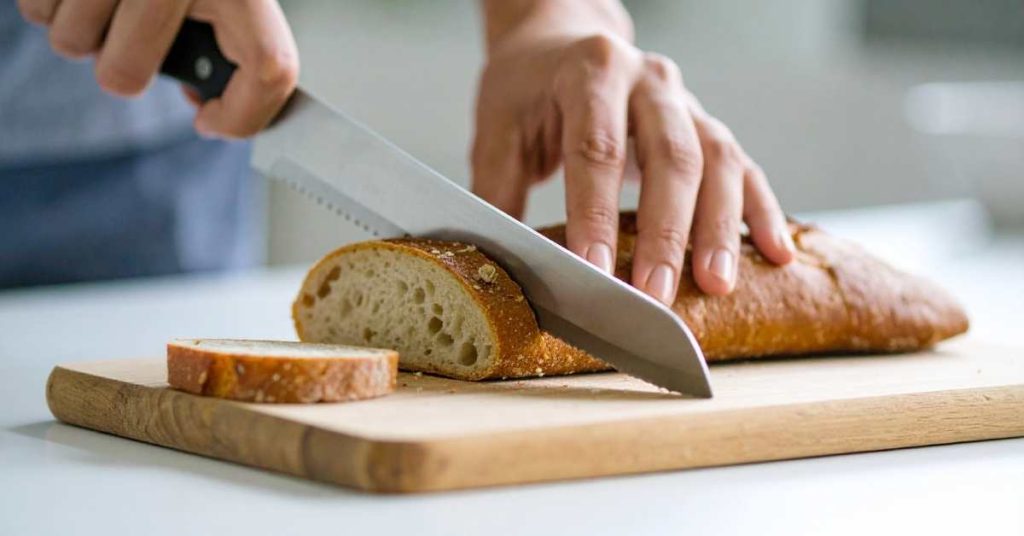
Start by placing the loaf on a stable surface. Use a gentle sawing motion rather than pressing down. Let the serrations do the work. Avoid forcing the blade, as this can crush the crumb and create uneven slices.
For best results:
- Use long, smooth strokes
- Keep the knife at a slight angle
- Clean the blade between cuts if necessary
Mastering these techniques will significantly improve your slicing results.
Common Mistakes to Avoid
Many people unknowingly damage their sourdough by using the wrong approach. Here are some common mistakes:
Using a Straight-Edge Knife
Straight-edge knives are not designed for crusty bread. They tend to slip and compress the loaf instead of slicing cleanly.
Applying Too Much Pressure
Pressing down too hard flattens the bread and ruins its texture. A good bread knife should require minimal force.
Choosing the Wrong Blade Size
A blade that is too short makes slicing difficult and inconsistent. Always opt for a longer blade for sourdough.
Neglecting Knife Maintenance
Even the best bread knife for sourdough needs occasional care. Keeping it clean and storing it properly extends its lifespan.
If you want a deeper look at top-performing options, check out this detailed guide on the best bread knife for sourdough.
Comparing Bread Knife Types
Different bread knives offer varying benefits. Understanding these differences helps you make an informed choice.
| Knife Type | Best For | Pros | Cons |
|---|---|---|---|
| Standard Serrated | General bread slicing | Affordable, widely available | May lack precision |
| Offset Bread Knife | Professional use | Better knuckle clearance | Slightly harder to control |
| Electric Bread Knife | Large volume slicing | Effortless cutting | Less control, bulky |
For sourdough, a high-quality serrated or offset knife is usually the best choice.
Maintenance Tips for Long-Lasting Performance
A bread knife doesn’t require frequent sharpening like straight-edge knives, but proper care is still essential.
Cleaning
Always wash your knife by hand. Avoid dishwashers, as they can damage the blade and handle.
Storage
Store your knife in a knife block, magnetic strip, or blade guard. This prevents dulling and protects the edge.
Sharpening
Serrated knives are harder to sharpen, but occasional professional sharpening keeps them in top condition.
Regular maintenance ensures your knife remains effective for years.
How to Choose the Right Bread Knife for Your Needs
Selecting the best bread knife for sourdough depends on your usage and preferences.
Consider the following factors:
- Frequency of use
- Budget
- Bread size and type
- Personal comfort
If you bake sourdough regularly, investing in a premium knife is worthwhile. Occasional users may prefer a mid-range option that still delivers reliable performance.
A well-chosen knife not only improves slicing but also enhances your overall kitchen experience.
Benefits of Using the Right Bread Knife
Using the correct bread knife offers several advantages beyond just slicing.
Improved Presentation
Clean, even slices make your bread look more appealing, whether for serving guests or enjoying at home.
Reduced Waste
Precise cuts minimize crumbling and uneven pieces, ensuring more usable bread.
Enhanced Safety
A sharp, well-designed knife is actually safer than a dull one. It requires less force and reduces the risk of slipping.
Better Texture Preservation
The right knife maintains the integrity of the crumb, preserving the bread’s unique texture.
If you’re serious about your bread, investing in the best bread knife for sourdough is a decision that pays off every time you slice a loaf.
Final Thoughts on Finding the Perfect Bread Knife
Choosing the best bread knife for sourdough is about more than just cutting bread. It’s about preserving the craftsmanship of the loaf, maintaining its texture, and enhancing your overall experience.
From blade length and serration design to handle comfort and maintenance, every detail matters. A high-quality bread knife makes slicing effortless, precise, and enjoyable.
Whether you are a home baker or simply love artisan bread, the right knife is an essential tool in your kitchen. By understanding what to look for and how to use it properly, you can achieve perfect sourdough slices every time.